
Call us now :08045812175
 Send Inquiry
Styx Z7 FPGA Module
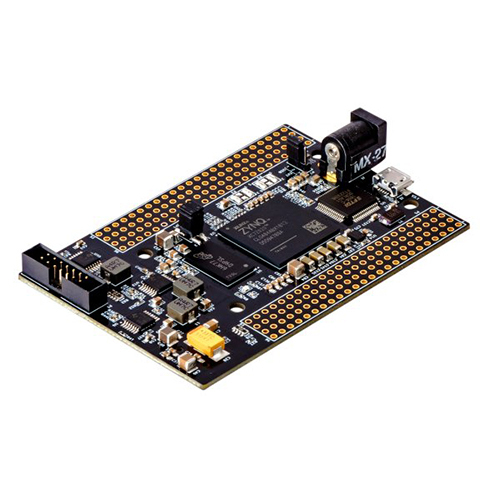

Styx Z7 FPGA Module Specification
- Insulation Resistance
- >10^12
- Silkscreen
- White
- Board Type
- Rigid
- Hole Size
- 0.2 mm (min)
- Min. Line Spacing
- 0.15 mm
- Min. Line Width
- 0.15 mm
- Voltage Endurance
- 250V AC
- Impedance
- Controlled
- Soldermask
- Green
- Flame Resistance Level
- 94V-0
- Test
- 100% E-test
- Product Type
- FPGA Development board
- Base Material
- FR4
- Surface Finish
- ENIG (Electroless Nickel Immersion Gold)
- Copper Thickness
- 1 oz
- Board Thickness
- 1.6 mm
- Color
- Green
- Sensor Switch
- No
- Electrical Components
- Mounted
- Number Of Layers
- 6
- Connectors
- 2 x high-speed FMC LPC, 2 x 2x6 PMOD
- FPGA Device
- Xilinx Zynq-7000 (Zynq-7Z010/7Z020)
- DDR3 SDRAM
- 512 MB, 32-bit wide
- RoHS Compliance
- Yes
- Supported Interface
- USB 2.0, JTAG, UART, FMC, PMOD
- Operating Voltage
- 5V DC
- Flash Memory
- 16 MB SPI Flash
- Programming
- On-board USB JTAG
- Operating Temperature
- 0C to +70C
- On-board Oscillator
- 33.333 MHz
- Dimensions
- 90 mm x 60 mm
Styx Z7 FPGA Module Trade Information
- Minimum Order Quantity
- 1 Unit
- Supply Ability
- 10 Units Per Day
- Delivery Time
- 1-4 Days
About Styx Z7 FPGA Module
Features
- Pin compatible with Saturn S6 FPGA Module, Neso A7 FPGA Module, and Skoll K7 FPGA Module and offers a seamless upgrade path
- Device: XC7Z020 in CLG484 package
- DDR3: 2Gb DDR3 (MT41J128M16HA-125:K or equivalent)
- Flash memory: 128 Mb Quad bit SPI flash memory (N25Q128A13EF840E)
- 33.33 MHz CMOS Oscillator
- 100 MHz CMOS Oscillator
- High-Speed USB 2.0 interface for onboard flash programming.
- FT2232H Channel B is dedicated to SPI Flash /JTAG Programming. Channel A can be used for custom applications
- Onboard voltage regulators for single-power rail operation
- Flash programming via JTAG and USB
- Maximum IOs for user-defined purposes
- FPGA 150 IOs
- FT2232H 8 IOs
- All user IOs are length matched and can be used as differential pairs
Applications
- Product Prototype Development
- Development and testing of custom-embedded processors
- Signal Processing
- Communication device development
- Educational tool for Schools and Universities
Powerful Performance in a Compact Footprint
The Styx Z7 FPGA Module is engineered for demanding embedded solutions requiring both processing power and flexibility. With a Xilinx Zynq-7000 SoC, integrated 512 MB DDR3 SDRAM, and multiple high-speed expansion options, it excels in real-time applications and hardware acceleration.
Seamless Integration and Expandability
Designed for easy integration, the module's dual FMC LPC and PMOD connectors facilitate rapid prototyping and interface expansion. USB JTAG programming and diverse communication interfaces enable straightforward development and testing for engineers and researchers.
Industrial Grade Reliability and Quality Construction
Built on a 6-layer FR4 board with ENIG finish, 1 oz copper, and rigorous electrical testing, the Styx Z7 FPGA Module offers robust performance, flame resistance (94V-0), and consistent signal integrity. Its RoHS compliance and durable design ensure long-term reliability in professional environments.
FAQ's of Styx Z7 FPGA Module:
Q: How do I program the Styx Z7 FPGA Module?
A: You can program the Styx Z7 FPGA Module using the on-board USB JTAG interface, which allows fast and reliable configuration of the Xilinx Zynq-7000 device. Standard Xilinx development tools (such as Vivado) are supported for programming and debugging.Q: What applications benefit most from using the Styx Z7 FPGA Module?
A: The Styx Z7 is ideal for embedded computing, digital signal processing, high-speed data acquisition, academic research, and rapid prototyping. Its flexible interfaces and expandability make it suitable for both industrial and laboratory settings.Q: When should I use FMC or PMOD connectors on this module?
A: FMC LPC connectors provide high-speed, high-density connectivity for custom daughter cards and advanced peripherals, while the PMOD connectors are perfect for low-pin-count modules like sensors or simple I/O, making them useful for diverse interfacing needs during prototyping or deployment.Q: Where can this FPGA module be operated safely?
A: The Styx Z7 FPGA Module is designed for controlled environments with an operating temperature of 0C to +70C. It is suitable for use in laboratories, classrooms, and industrial settings that meet these conditions.Q: What is the process for integrating the module into my system?
A: Begin by supplying regulated 5V DC power. Use USB JTAG for programming and firmware updates. Interface required peripherals through FMC or PMOD connectors, and use supported communication protocols (UART, USB 2.0, JTAG) to integrate the module with your host system.Q: How does the Styx Z7 FPGA Module ensure reliability and electrical safety?
A: The board uses high-quality FR4 material, 6-layer construction, and ENIG surface finish, complemented by rigorous 100% E-testing and a flame resistance rating of 94V-0. It provides insulation resistance greater than 10^12 , controlled impedance, and voltage endurance up to 250V AC.Tell us about your requirement

Price:
Quantity
Select Unit
- 50
- 100
- 200
- 250
- 500
- 1000+
Additional detail
Mobile number
Email

More Products in FPGA Boards Category
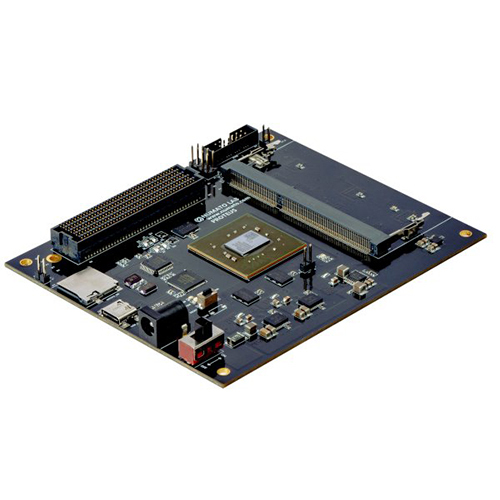
Proteus K7 USB 3.1 Development Board
Price 110000 INR / Unit
Minimum Order Quantity : 1 Unit
Hole Size : 0.3mm (Minimum)
Test : Other, Etest (Professional)
Flame Resistance Level : UL94V0
Board Type : Rigid
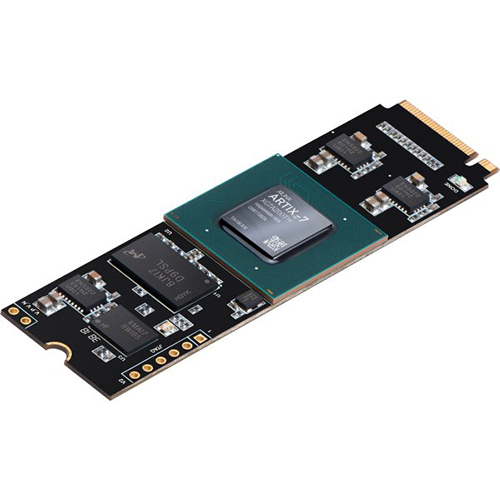
Aller A7 FPGA Board with M.2 Interface
Price 55000 INR / Unit
Minimum Order Quantity : 1 Unit
Hole Size : 0.3 mm min
Test : Other, 100% ETested
Flame Resistance Level : UL 94V0
Board Type : Rigid
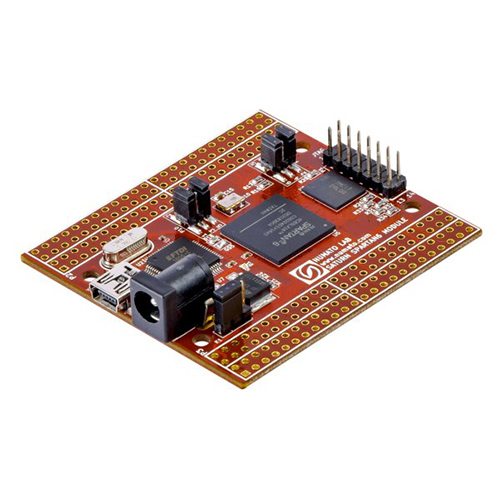
Saturn S6 FPGA Development Board with DDR SDRAM
Price 19800 INR / Unit
Minimum Order Quantity : 1 Unit
Hole Size : Min. 0.3mm
Test : Other, 100% Functional Test
Flame Resistance Level : 94V0
Board Type : Rigid
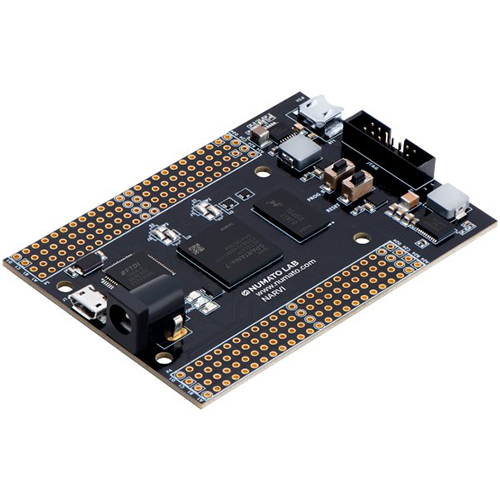
Narvi S7 FPGA Module
Price 22000 INR / Unit
Minimum Order Quantity : 1 Unit
Hole Size : 0.2mm (min)
Test : Other, 100% Etest
Flame Resistance Level : UL94V0
Board Type : Rigid


 Send Inquiry
Our Products


H No 2-3-54, Co-Operative Bank Colony, Road No. 6, Nogole,Hyderabad - 500068, Telangana, India

Mr Suneel
Mobile :08045812175
 Send Inquiry
 Send SMS
Developed and Managed by Infocom Network Private Limited.
