
Call us now :08045812175
 Send Inquiry
FPGA Board
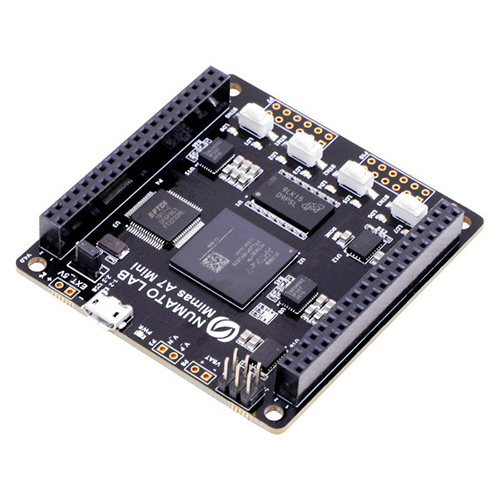

FPGA Board Specification
- Min. Line Spacing
- 0.15 mm
- Insulation Resistance
- >10^10
- Test
- Other
- Soldermask
- Green
- Voltage Endurance
- 250V AC
- Impedance
- Controlled Impedance
- Flame Resistance Level
- UL94 V-0
- Min. Line Width
- 0.15 mm
- Silkscreen
- White
- Hole Size
- 0.3 mm
- Board Type
- Rigid
- Product Type
- FPGA Development board
- Base Material
- FR4
- Surface Finish
- Other
- Copper Thickness
- 1 oz
- Board Thickness
- 1.6 mm
- Color
- Green
- Panel Size
- 70 mm x 40 mm
- Sensor Switch
- Tactile Push Button
- Electrical Components
- Micro USB Connector, JTAG Header, LEDs, DIP Switches, Reset Button
- Number Of Layers
- 4
- Operating Temperature
- 0C to 70C
- USB Interface
- Micro USB (for programming & UART)
- Clock Source
- 100 MHz On-board Oscillator
- Dimensions
- 70 mm x 40 mm
- Mounting Type
- PCB Mount
- LED Indicators
- User LEDs, Power LED
- Input Voltage Range
- 4.5V-5.5V
- Supported Development Tools
- Xilinx Vivado
- FPGA Chip
- Xilinx Artix-7 (XC7A35T)
- I/O Pins
- 40-pin Expansion Header (3.3V)
- On-board Memory
- 512Mb SPI Flash (for FPGA configuration and user data)
- Supported Voltage
- 3.3V IO
- Power Supply
- 5V via USB or External Header
- Programming Interfaces
- JTAG & USB
FPGA Board Trade Information
- Minimum Order Quantity
- 1 Unit
- Supply Ability
- 10 Units Per Day
- Delivery Time
- Days
About FPGA Board
Features
- Device: AMD Artix 7 FPGA (XC7A35T-1FTG256C)
- DDR3: 2Gb DDR3 (MT41J128M16JT-125 or equivalent)
- Built-in programming interface. No expensive JTAG adapters needed for programming the board
- Onboard 128Mb flash memory for FPGA configuration storage and custom user data storage
- High-Speed USB 2.0 interface for On-board flash programming. FT2232H Channel B is dedicated to JTAG Programming. Channel A can be used for custom applications
- 100MHz CMOS oscillator
- 8 LEDs, 1 RGB LED and 4 Push Buttons for user-defined purposes
- FPGA configuration via JTAG and USB
- Maximum IOs for user-defined purposes
- FPGA " 70 IOs (35 professionally length matched Differential Pairs) and two 26 Expansion Headers
Applications
- Product Prototype Development
- Accelerated computing integration
- Development and testing of custom embedded processors
- Communication devices development
- Educational tool for Schools and Universities
High-Performance FPGA in a Compact Design
The Mimas A7 Mini offers powerful computation with the Xilinx Artix-7 (XC7A35T) FPGA, ensuring the capability to handle complex digital design requirements. Its small size and versatile interface make it practical for both professionals and students.
Versatile Connectivity and Expansion Options
Equipped with a 40-pin expansion header (3.3V), USB interface for both programming and UART, as well as on-board SPI Flash memory, the board supports a wide range of peripheral and communication requirements for your projects.
Ease of Use and Reliable Power Supply
The board is designed for user convenience, supporting 5V power via USB or an external header. Features like user LEDs, tactile push buttons, and DIP switches enhance interactivity and prototyping flexibility.
FAQ's of Mimas A7 Mini FPGA Development Board:
Q: How do I program the Mimas A7 Mini FPGA Development Board?
A: You can program the Mimas A7 Mini using either the USB interface or the dedicated JTAG header. The board is compatible with Xilinx Vivado design tools, making it easy to load your FPGA configuration via USB (Micro) or JTAG connection.Q: What development tools are supported with this board?
A: The Mimas A7 Mini is supported by the Xilinx Vivado development suite, which is used to create, simulate, and download designs onto the Artix-7 XC7A35T FPGA.Q: When should I use the external power header instead of USB?
A: Use the external power header for applications that require higher current or when USB power is insufficient for connected peripherals. The board accepts input voltages between 4.5V and 5.5V.Q: Where can I access the GPIO pins for interfacing?
A: The 40-pin expansion header on the board provides easy access to the FPGA's I/O pins, all operating at 3.3V, suitable for connecting sensors, modules, or custom circuits.Q: What process should I follow to configure the FPGA and store user data?
A: The 512Mb SPI Flash memory is used to store the FPGA bitstream and user data. Use Vivado to generate your configuration file and program it onto the flash via USB or JTAG interfaces.Q: How is the Mimas A7 Mini beneficial for prototyping and development?
A: Its combination of a powerful Artix-7 FPGA, abundant I/O, user interface elements, and compatibility with industry-standard tools makes it ideal for rapid prototyping, embedded development, and educational purposes.Q: What safety and durability features does the board have?
A: Constructed on a four-layer rigid PCB with ENIG finish, UL94 V-0 flame resistance, and controlled impedance, the board ensures robust operation and reliability in various environments.Tell us about your requirement

Price:
Quantity
Select Unit
- 50
- 100
- 200
- 250
- 500
- 1000+
Additional detail
Mobile number
Email

More Products in FPGA Boards Category
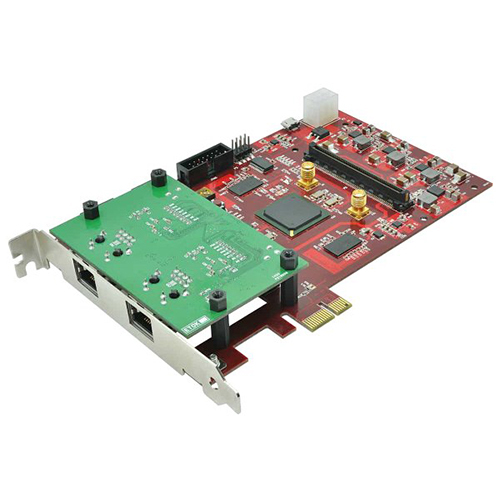
Galatea PCI Express S6 FPGA Development Board
Price 30030 INR / Unit
Minimum Order Quantity : 1 Unit
Board Thickness : 1.6 mm
Test : Other, 100% Etest
Electrical Components : Includes Xilinx Spartan6 FPGA, PCIe connectors, onboard memory
Product Type : FPGA Development board
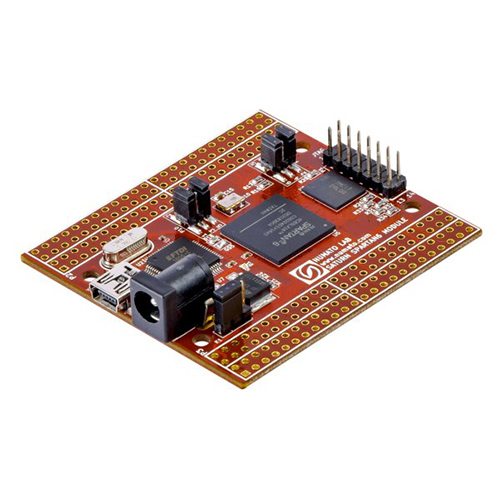
Saturn S6 FPGA Development Board with DDR SDRAM
Price 19800 INR / Unit
Minimum Order Quantity : 1 Unit
Board Thickness : 1.6mm
Test : Other, 100% Functional Test
Electrical Components : Xilinx Spartan6 LX45 FPGA, DDR SDRAM, USB UART, Flash Memory, FT2232H for JTAG & UART
Product Type : FPGA Development board
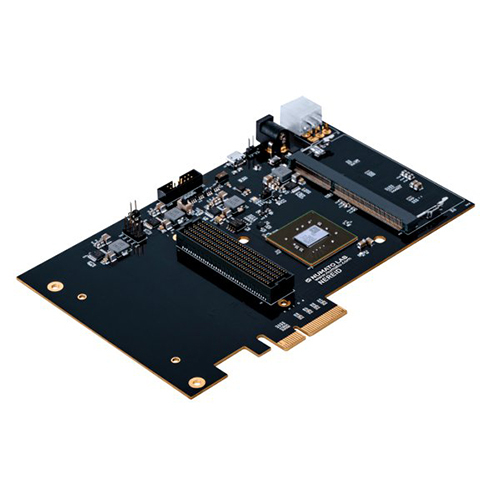
Nereid K7 PCI Express FPGA Development Board
Price 110000 INR / Unit
Minimum Order Quantity : 1 Unit
Board Thickness : 1.6 mm
Test : Other, 100% ETest
Electrical Components : FPGA, connectors, LEDs, switches, clock oscillators, voltage regulators
Product Type : FPGA Development board
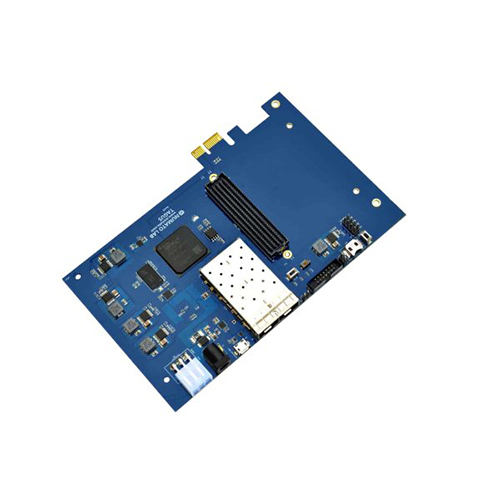
PCI Express
Price 66000 INR / Unit
Minimum Order Quantity : 1 Unit
Board Thickness : 1.6mm
Test : Other
Electrical Components : Includes Artix7 FPGA, PCI Express Edge Connector, DDR3 Memory
Product Type : FPGA Development board


 Send Inquiry
Our Products


H No 2-3-54, Co-Operative Bank Colony, Road No. 6, Nogole,Hyderabad - 500068, Telangana, India

Mr Suneel
Mobile :08045812175
 Send Inquiry
 Send SMS
 Call Me Free
Developed and Managed by Infocom Network Private Limited.
