
Call us now :08045812175
 Send Inquiry
Saturn S6 FPGA Development Board with DDR SDRAM
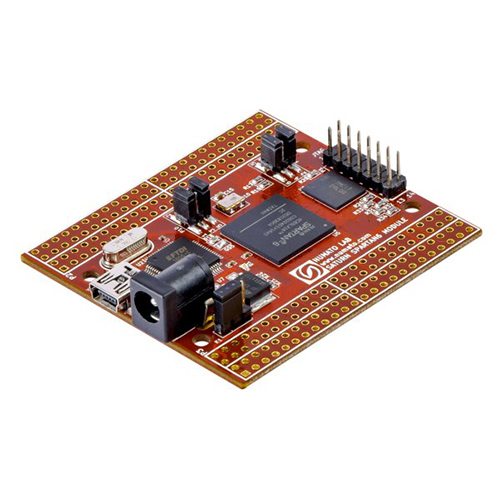

Saturn S6 FPGA Development Board with DDR SDRAM Specification
- Silkscreen
- White
- Board Type
- Rigid
- Voltage Endurance
- 50V DC
- Insulation Resistance
- >10^12
- Min. Line Width
- 0.1mm
- Soldermask
- Green
- Flame Resistance Level
- 94V-0
- Hole Size
- Min. 0.3mm
- Impedance
- Controlled, 10%
- Min. Line Spacing
- 0.1mm
- Test
- 100% Functional Test
- Product Type
- FPGA Development board
- Base Material
- FR4
- Surface Finish
- ENIG (Electroless Nickel Immersion Gold)
- Copper Thickness
- 35m (1 oz/ft)
- Board Thickness
- 1.6mm
- Color
- Green
- Panel Size
- Standard 8 x 6
- Sensor Switch
- Not Included
- Electrical Components
- Xilinx Spartan-6 LX45 FPGA, DDR SDRAM, USB UART, Flash Memory, FT2232H for JTAG & UART
- Number Of Layers
- 4 layers
- RoHS Compliance
- Yes
- Dimensions
- approx. 100mm x 90mm
- DDR SDRAM
- 128MB, 16-bit wide
- Push Buttons
- 4 user push buttons
- User LEDs
- 8 user-programmable LEDs
- Operating Voltage
- 5V DC input (regulated to 3.3V/1.2V)
- PC Interfaces
- Micro-USB (UART, JTAG, power), microSD slot
- Clock Source
- 100 MHz onboard crystal oscillator
- ESD Protection
- Integrated on I/O lines
- Temperature Range
- 0C to +70C (commercial grade)
- Expansion Connectors
- 2x40-pin GPIO Headers, PMOD compatible
- Debug Interfaces
- Onboard FT2232H (dual-channel JTAG and UART bridge)
- On-Board Flash
- 16MB SPI Flash
- Power Supply Options
- USB-powered or external supply
- FPGA Device
- Xilinx Spartan-6 LX45 (XC6SLX45)
Saturn S6 FPGA Development Board with DDR SDRAM Trade Information
- Minimum Order Quantity
- 1 Unit
- Supply Ability
- 10 Units Per Day
- Delivery Time
- 1-4 Days
About Saturn S6 FPGA Development Board with DDR SDRAM
Features
- Xilinx Spartan 6 FPGA USB 2.0 Host Interface Upto 150 User IOs DDR SDRAM For Temporary Data Storage Built In Configuration System
- FPGA: AMD Spartan 6 LX45 in CSG324 package (other variants available, please contact us for details)
- DDR: 166MHz 512Mb LPDDR
- Flash memory: 128 Mb SPI flash memory
- 100MHz CMOS oscillator
- High-Speed USB 2.0 interface for On-board flash programming
- FT2232H Channel A is dedicated to SPI Flash Programming. Channel B can be used for custom applications.
- Onboard voltage regulators for single power rail operation
- FPGA configuration via JTAG and USB
- XC6SLX16 150 IOs
- XC6SLX45 136 IOs
- FT2232H 8 IOsMaximum 158 IOs for user-defined purposes
Applications
- OEM Integration Acceleration Evaluation ResearchResearch
- Product Prototype Development
- OEM Integration
- Development and testing of custom embedded processors
- Signal Processing
- Communication device development
- Educational tool for Schools and Universities
Extensive Connectivity and Expansion
The Saturn S6 development board offers a wide array of connection options for enhanced flexibility. Dual 40-pin GPIO headers and PMOD compatibility make it easy to interface with various peripherals. The presence of a microSD slot, 16MB SPI Flash, and robust PC interfaces via micro-USB ensure smooth workflows for data transfer, programming, and development.
Optimal Power Management and Reliability
With a 5V DC input (regulated down to 3.3V/1.2V), the board ensures stable operations. Users can opt for USB-powered mode or an external supply, offering adaptability in both lab and field scenarios. The board incorporates ESD protection, RoHS compliance, and a sturdy build with 4-layer FR4 base, ENIG finish, and integrated user LEDs for monitoring.
Debugging Made Effortless
The onboard FT2232H dual-channel bridge supports both JTAG and UART functions, enabling easy programming as well as real-time debugging directly from your PC. The inclusion of 8 user-programmable LEDs and 4 push buttons adds further convenience for testing and real-time feedback during the development process.
FAQ's of Saturn S6 FPGA Development Board with DDR SDRAM:
Q: How do I program the Saturn S6 FPGA Development Board?
A: You can program the Saturn S6 FPGA board using the onboard FT2232H chip, which provides JTAG access through the micro-USB port. Supported by Xilinx tools such as iMPACT or Vivado, programming is straightforward and does not require additional hardware.Q: What are the main benefits of the Xilinx Spartan-6 LX45 FPGA on this board?
A: The Spartan-6 LX45 offers a strong balance of logic resources, memory, and performance suitable for a diverse range of applications, including digital design, signal processing, and communications. Its compatibility with industry-standard development tools facilitates rapid prototyping and deployment.Q: Where can I interface additional peripherals with the development board?
A: Peripheral devices can be connected via the two 40-pin GPIO headers, which are PMOD compatible for modular add-ons. The microSD slot and SPI Flash expand memory options, while the micro-USB provides UART, JTAG, and power interfaces.Q: What process should I follow to power the board?
A: The Saturn S6 can be powered either through the micro-USB port or by supplying 5V DC to the external power connector. The onboard regulator automatically steps the voltage down to 3.3V and 1.2V for stable FPGA and peripheral operation.Q: When is it advisable to use external power instead of USB power?
A: External power is recommended when your application requires higher current than a typical USB port can supply, or when connecting multiple power-intensive peripherals to the board through GPIO headers.Q: How does ESD protection and RoHS compliance benefit users?
A: Integrated ESD protection on all I/O lines reduces the risk of damage from electrostatic discharge, enhancing the board's durability and safety. RoHS compliance ensures the product meets environmental standards, making it safe for both users and the environment.Tell us about your requirement

Price:
Quantity
Select Unit
- 50
- 100
- 200
- 250
- 500
- 1000+
Additional detail
Mobile number
Email

More Products in FPGA Boards Category
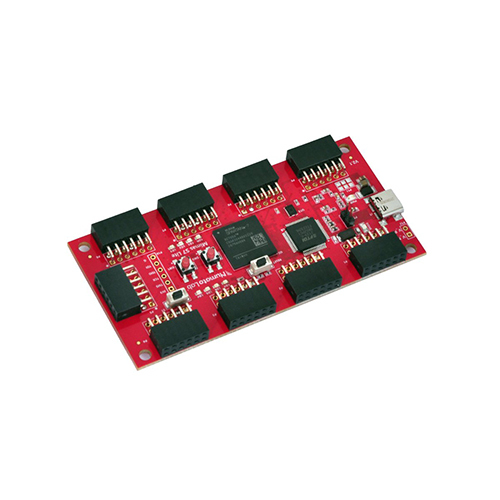
Mimas S7 Lite
Price 11000 INR / Unit
Minimum Order Quantity : 1 Unit
Board Type : Other, Single Board
Product Type : FPGA Development board
Silkscreen : White
Soldermask : Blue
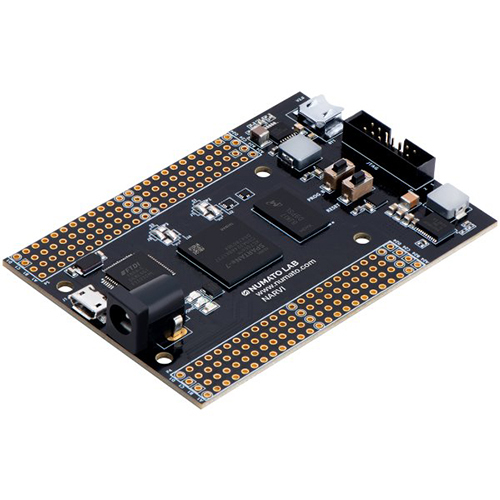
FPGA Based
Price 22000 INR / Unit
Minimum Order Quantity : 1 Unit
Board Type : Rigid
Product Type : FPGA Development board
Silkscreen : White
Soldermask : Green

Callisto S6 USB 3.1 FPGA Module
Price 71280 INR / Unit
Minimum Order Quantity : 1 Unit
Board Type : Other, Module
Product Type : FPGA Development board
Silkscreen : White
Soldermask : Green
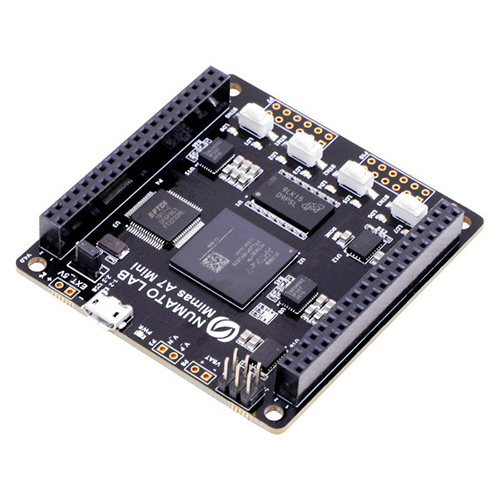
FPGA Board
Price 160.0 INR / Unit
Minimum Order Quantity : 1 Unit
Board Type : Rigid
Product Type : FPGA Development board
Silkscreen : White
Soldermask : Green


 Send Inquiry
Our Products


H No 2-3-54, Co-Operative Bank Colony, Road No. 6, Nogole,Hyderabad - 500068, Telangana, India

Mr Suneel
Mobile :08045812175
 Send Inquiry
 Send SMS
 Call Me Free
Developed and Managed by Infocom Network Private Limited.
