
Call us now :08045812175
 Send Inquiry
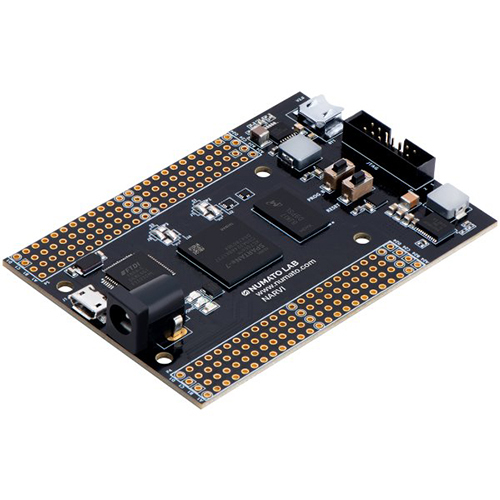
Nereid K7 PCI Express FPGA Development Board
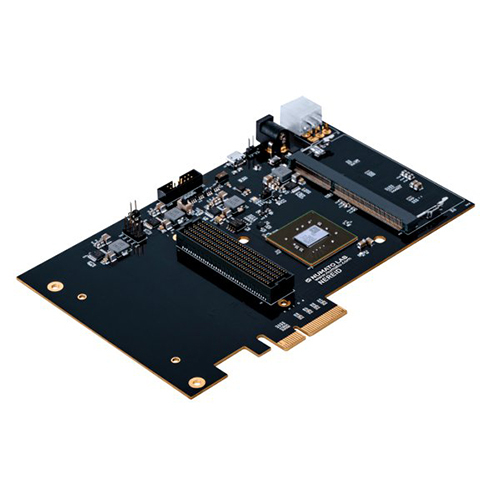

Nereid K7 PCI Express FPGA Development Board Specification
- Silkscreen
- White, both sides
- Soldermask
- Green, both sides
- Voltage Endurance
- 250V AC
- Flame Resistance Level
- UL94-V0
- Board Type
- Rigid
- Min. Line Width
- 6 mil
- Insulation Resistance
- >10^12
- Min. Line Spacing
- 6 mil
- Hole Size
- 0.3 mm (min)
- Test
- 100% E-Test
- Impedance
- Controlled impedance traces
- Product Type
- FPGA Development board
- Base Material
- FR4
- Surface Finish
- ENIG (Electroless Nickel/Immersion Gold)
- Copper Thickness
- 1 oz
- Board Thickness
- 1.6 mm
- Color
- Green
- Panel Size
- Standard PCIe form factor
- Sensor Switch
- No
- Electrical Components
- FPGA, connectors, LEDs, switches, clock oscillators, voltage regulators
- Number Of Layers
- 6 Layers
- Compliance
- RoHS
- Power Supply
- 12V external or PCIe slot powered
- Operating Temperature Range
- 0C ~ +70C
- User I/O Connectors
- FMC (FPGA Mezzanine Card), GPIO headers
- Onboard Memory
- DDR3 SDRAM 1GB
- Debug Features
- LEDs, Push Buttons, and DIP switches
- FPGA
- Xilinx Kintex-7 (XC7K325T)
- Clock Oscillators
- Multiple, including system and user programmable
- Dimensions
- Approx. 168 mm x 111 mm
- Configuration
- JTAG and onboard Flash
- PCI Express Interface
- Gen2 x4
Nereid K7 PCI Express FPGA Development Board Trade Information
- Minimum Order Quantity
- 1 Unit
- Supply Ability
- 10 Units Per Day
- Delivery Time
- 1-4 Days
About Nereid K7 PCI Express FPGA Development Board
Features
- FPGA: AMD Kintex-7 XC7K160T-1 FBG676 package (Other devices available at request)
- 4 lane PCIe Gen2.0 (5GT/s) interface at maximum 2GB/s
- 4GB DDR3L SODIMM SDRAM M471B5173CB0-YK0 1600MHz (included)
- 128 Mb QSPI flash memory (N25Q128A13ESE40E) for Configuration and optional data storage
- USB to UART serial converter
- 1 x 100MHz CMOS oscillator, 1x 150MHz LVDS oscillator for users
- 1 x 150MHz LVDS oscillator for GTP
- ANSI/VITA 57.1 Standard compliant FMC HPC connector
- Maximum 174 IOs for user-defined purposes on FMC connector
- Onboard voltage regulators for single power rail operation
- Can be powered from PCIe slot or from an external power supply
- JTAG header for programming and debugging
- All differential pairs are length matched on the board
- 1 RGB LED for custom use
Applications
- Parallel processing and accelerators
- Development and testing of custom embedded processors
- Signal Processing
- Communication device development
- Data Acquisition
- Educational tool for Schools and Universities
- * Fan available only on larger FPGA variants
Advanced FPGA Performance
Powered by the Xilinx Kintex-7 XC7K325T, the Nereid K7 supports demanding applications requiring high logic density and speed. Its Gen2 x4 PCI Express interface ensures rapid communication with host systems, ideal for data acquisition, acceleration, and research applications.
Flexible Memory and Connectivity
Onboard 1GB DDR3 SDRAM and versatile I/O connectors, such as FMC and GPIO headers, provide extensive options for interfacing with add-ons or custom peripherals. Programmable clock oscillators cater to various timing requirements, further expanding development capabilities.
Robust Design for Reliability
The board features a 6-layer FR4 construction, ENIG surface finish, and controlled impedance traces for electrical stability. Its design includes comprehensive power options and stringent testing, ensuring dependable operation within 0C to +70C, suitable for diverse project environments.
FAQ's of Nereid K7 PCI Express FPGA Development Board:
Q: How do I configure the Nereid K7 FPGA development board?
A: The Nereid K7 supports configuration via both JTAG and onboard Flash memory, allowing you to load your FPGA bitstream using standard Xilinx programming tools for flexible and convenient setup.Q: What are the power supply options for the Nereid K7?
A: You can power the board either through a 12V external adapter or directly from the PCIe slot, providing adaptability for standalone or in-system use.Q: When should I use the FMC and GPIO headers?
A: FMC and GPIO headers are useful whenever you need to expand board functionality, connect custom peripherals, or integrate third-party modules for prototyping or system development.Q: Where can the Nereid K7 be deployed given its operating temperature range?
A: With an operating range of 0C to +70C, the board is suitable for use in standard indoor environments such as laboratories, development offices, and academic settings.Q: What benefits does the board's standard PCIe form factor offer?
A: The standard PCIe form factor ensures compatibility with most desktop and server chassis, simplifying installation and integration within commercial and research computing systems.Q: How does the board facilitate debugging during development?
A: The Nereid K7 includes user-friendly debug features like LEDs, push buttons, and DIP switches, enabling interactive testing, status monitoring, and efficient troubleshooting during hardware and software development.Q: What advantages does the ENIG surface finish provide?
A: ENIG (Electroless Nickel/Immersion Gold) finish delivers excellent solderability, enhanced durability, and superior electrical performance, making the board robust for repeated use and assembly.Tell us about your requirement

Price:
Quantity
Select Unit
- 50
- 100
- 200
- 250
- 500
- 1000+
Additional detail
Mobile number
Email

More Products in FPGA Boards Category
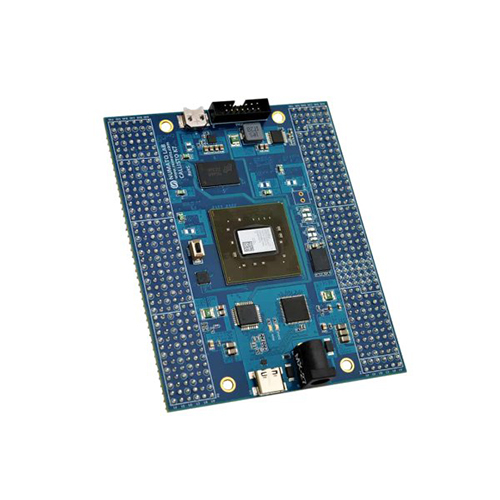
Callisto K7 USB 3.1 FPGA Module
Price 229.0 INR / Unit
Minimum Order Quantity : 1 Unit
Product Type : FPGA Development board
Board Type : Rigid
Min. Line Spacing : 0.1 mm
Hole Size : 0.3 mm (min.)
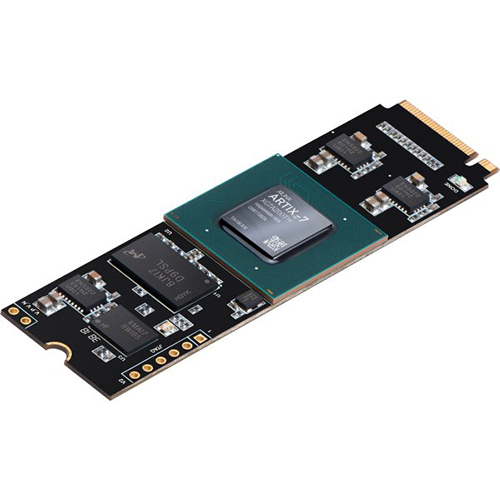
Aller A7 FPGA Board with M.2 Interface
Price 55000 INR / Unit
Minimum Order Quantity : 1 Unit
Product Type : FPGA Development board
Board Type : Rigid
Min. Line Spacing : 6 mil
Hole Size : 0.3 mm min
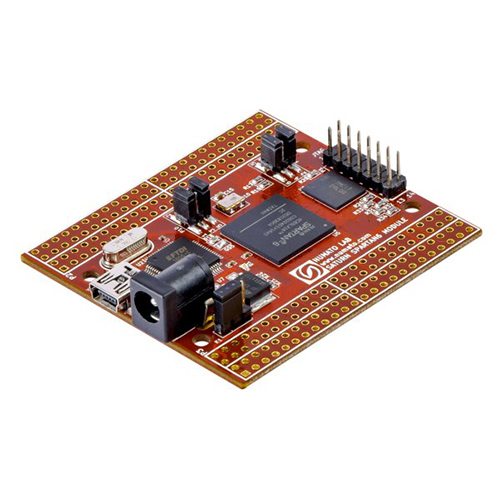
Saturn S6 FPGA Development Board with DDR SDRAM
Price 19800 INR / Unit
Minimum Order Quantity : 1 Unit
Product Type : FPGA Development board
Board Type : Rigid
Min. Line Spacing : 0.1mm
Hole Size : Min. 0.3mm
FPGA Based
Price 22000 INR / Unit
Minimum Order Quantity : 1 Unit
Product Type : FPGA Development board
Board Type : Rigid
Min. Line Spacing : 0.15mm
Hole Size : 0.2mm (min)


 Send Inquiry
Our Products


H No 2-3-54, Co-Operative Bank Colony, Road No. 6, Nogole,Hyderabad - 500068, Telangana, India

Mr Suneel
Mobile :08045812175
 Send Inquiry
 Send SMS
Developed and Managed by Infocom Network Private Limited.
