
Call us now :08045812175
 Send Inquiry
Mimas V2 S6 FPGA Development Board with DDR SDRAM
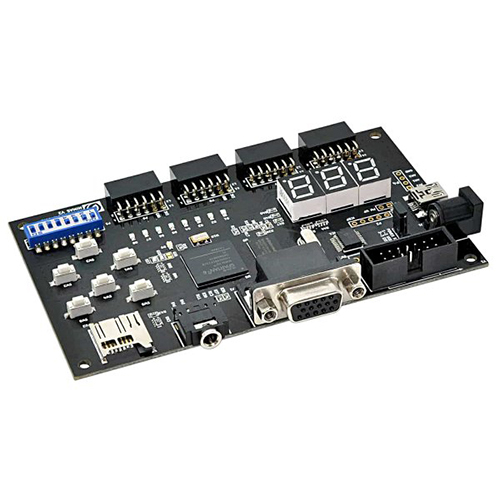

Mimas V2 S6 FPGA Development Board with DDR SDRAM Specification
- Soldermask
- Green
- Min. Line Width
- 0.15 mm
- Flame Resistance Level
- V-0
- Min. Line Spacing
- 0.15 mm
- Hole Size
- 0.3 mm (min)
- Insulation Resistance
- > 10^12
- Board Type
- SMD and TH Components
- Test
- 100% E-test
- Impedance
- Controlled
- Voltage Endurance
- 250V AC/min
- Silkscreen
- White
- Product Type
- FPGA Development board
- Base Material
- FR4
- Surface Finish
- HASL with lead
- Copper Thickness
- 35 m
- Board Thickness
- 1.6 mm
- Color
- Green
- Panel Size
- 120 mm x 75 mm
- Sensor Switch
- No
- Electrical Components
- XC6SLX9 Spartan-6 FPGA, 512Mb DDR SDRAM, 16 Mb SPI Flash
- Number Of Layers
- 4
- Power Supply
- 5V DC via Mini USB
- Programming Method
- Onboard JTAG (USB)
- Operating Temperature Range
- 0C to +70C (Commercial Grade)
- Clock Source
- 50 MHz onboard crystal oscillator
- Expansion Connectors
- 2x 40-pin headers (3.3V logic)
- Typical Applications
- Digital Design Prototyping, Embedded Systems, FPGA Learning
- On-board Memory
- 512Mb DDR SDRAM, 16Mb SPI Flash
- Dimensions
- 120 mm x 75 mm
- User Interface
- 4 LEDs, 4 DIP switches, 5 tact switches, 1 reset button
- Supported Voltage Levels
- 3.3V I/O, onboard regulators
- FPGA Device
- Xilinx Spartan-6 XC6SLX9-TQG144
- USB Interface
- USB 2.0 (FT2232 based JTAG & UART)
Mimas V2 S6 FPGA Development Board with DDR SDRAM Trade Information
- Minimum Order Quantity
- 1 Unit
- Supply Ability
- 10 Units Per Day
- Delivery Time
- 1-4 Days
About Mimas V2 S6 FPGA Development Board with DDR SDRAM
Features
- FPGA: AMD Spartan XC6SLX9 in CSG324 package
- DDR Memory: 166MHz 512Mb LPDDR (MT46H32M16LF/W949D6CBHX6E)
- Flash memory: 16 Mb SPI flash memory (M25P16)
- USB 2.0 interface for On-board flash programming
- FPGA configuration via JTAG and USB
- 8 LEDs, Six Push Buttons, and 8 way DIP switch for user-defined purposes
- VGA Connector
- Stereo Jack
- Micro SD Card Adapter
- Three-Digit Seven Segment Displays
- 32 IOs for user-defined purposes
- Four 62 Expansion Connectors
- Onboard voltage regulators for single power rail operation
Applications
- Product Prototype Development
- Signal Processing
- Learning Digital Electronics
- Educational tool for schools and universities
Powerful FPGA Platform for Prototyping
Mimas V2 S6 leverages the capabilities of the Xilinx Spartan-6 XC6SLX9 FPGA, enabling rapid prototyping for digital designs and embedded systems. With its ample DDR SDRAM and SPI Flash, you get enhanced memory resources, supporting a wide range of applications from learning to advanced development.
Flexible Connectivity and Expansion
The board features dual 40-pin headers (3.3V logic) for easy I/O access and hardware expansion. USB 2.0 (FT2232-based) provides seamless onboard programming and UART communication, while the 50 MHz oscillator ensures a steady clock source for precise operations.
User-Friendly Interface and Robust Design
Equipped with 4 LEDs, 4 DIP switches, 5 tact switches, and a reset button, the Mimas V2 S6 supports quick project interactions. Its commercial grade, four-layer, FR4 construction with HASL finish guarantees reliability, enhanced insulation, and long-life performance in any development environment.
FAQ's of Mimas V2 S6 FPGA Development Board with DDR SDRAM:
Q: How do I program the Mimas V2 S6 FPGA Development Board?
A: You can program the Mimas V2 S6 using the onboard JTAG interface via the USB 2.0 FT2232 chip. Simply connect the board to your computer with a mini USB cable and use Xilinx development tools like iMPACT or Vivado for configuration.Q: What are the typical applications for this development board?
A: The Mimas V2 S6 is commonly used for digital design prototyping, embedded system development, and FPGA education or research projects, thanks to its robust memory, user interface, and expansion capabilities.Q: When should I use the DDR SDRAM on the board?
A: Utilize the 512Mb DDR SDRAM when your project requires large, high-speed memory for data buffers, image processing, or managing complex algorithms that exceed the internal FPGA memory capacity.Q: Where can I connect additional peripherals to the board?
A: You can connect external modules, sensors, or custom circuits using the dual 40-pin expansion headers provided on the board. These headers support 3.3V logic for safe, easy interfacing.Q: What is the process for powering the board?
A: Power is supplied through a 5V DC mini USB connection. The onboard regulators handle voltage conversion, stabilizing the supply for the FPGA and peripherals.Q: How can the onboard user interface components be used in projects?
A: The 4 LEDs, 4 DIP switches, and 5 tact switches can serve as status indicators, user inputs, or for debugging purposes, giving hands-on interaction to control and monitor your FPGA designs.Q: What are the main benefits of choosing the Mimas V2 S6 board?
A: You benefit from a versatile, reliable FPGA prototyping platform with extensive onboard memory, flexible expansion options, user-friendly interfaces, and support for industry-standard tools, all in a compact and robust design.Tell us about your requirement

Price:
Quantity
Select Unit
- 50
- 100
- 200
- 250
- 500
- 1000+
Additional detail
Mobile number
Email

More Products in FPGA Boards Category
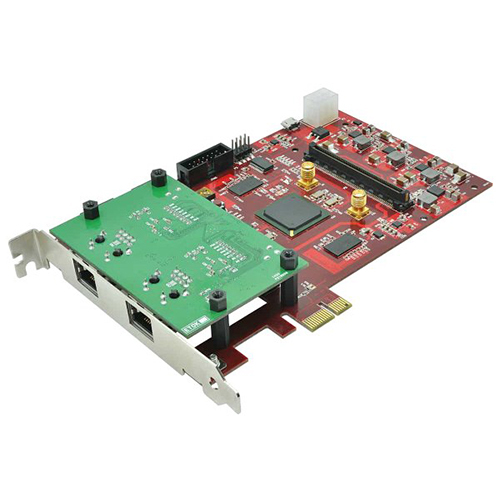
Galatea PCI Express S6 FPGA Development Board
Price 30030 INR / Unit
Minimum Order Quantity : 1 Unit
Board Type : Other, PCB
Min. Line Width : 6 mil
Min. Line Spacing : 6 mil
Board Thickness : 1.6 mm
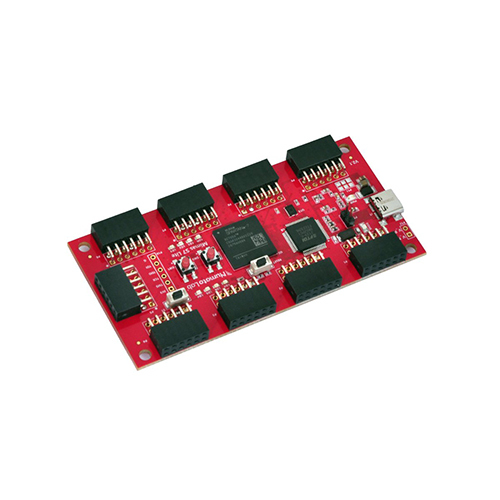
Mimas S7 Lite
Price 11000 INR / Unit
Minimum Order Quantity : 1 Unit
Board Type : Other, Single Board
Min. Line Width : 6 mil
Min. Line Spacing : 6 mil
Board Thickness : 1.6 mm
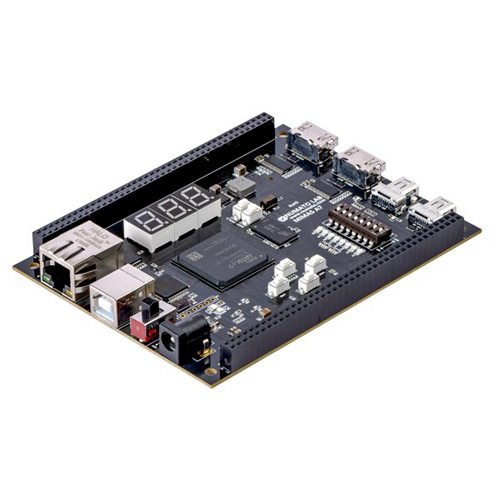
FPGA Development Board
Price 70.0 INR / Unit
Minimum Order Quantity : 1 Unit
Board Type : Other, FR4 PCB
Min. Line Width : 0.1 mm
Min. Line Spacing : 0.1 mm
Board Thickness : 1.6 mm
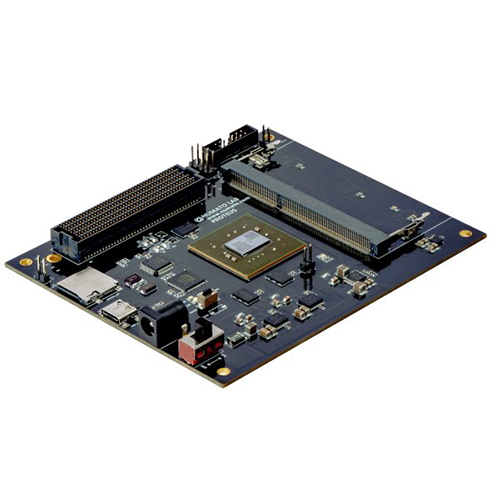
Development Board
Price 110000 INR / Unit
Minimum Order Quantity : 1 Unit
Board Type : Rigid
Min. Line Width : 0.15mm
Min. Line Spacing : 0.15mm
Board Thickness : 1.6mm


 Send Inquiry
Our Products


H No 2-3-54, Co-Operative Bank Colony, Road No. 6, Nogole,Hyderabad - 500068, Telangana, India

Mr Suneel
Mobile :08045812175
 Send Inquiry
 Send SMS
 Call Me Free
Developed and Managed by Infocom Network Private Limited.
